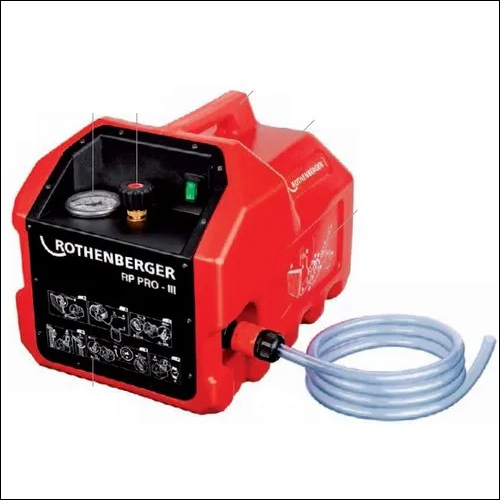
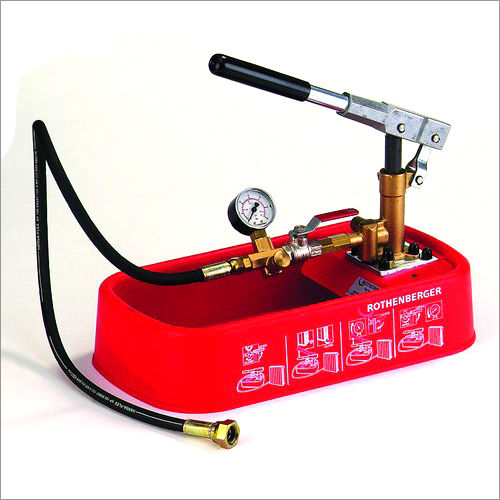
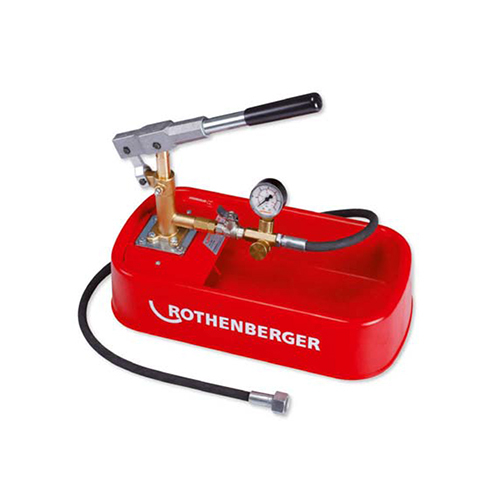
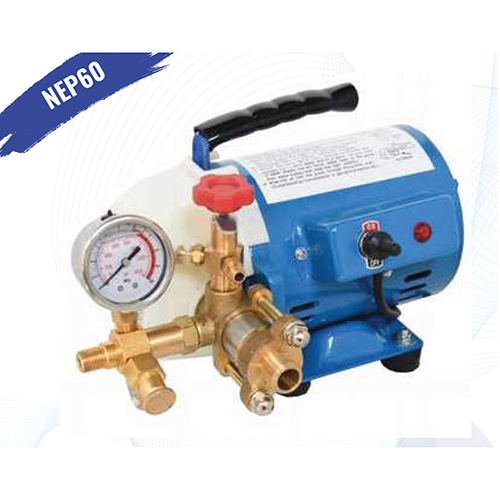
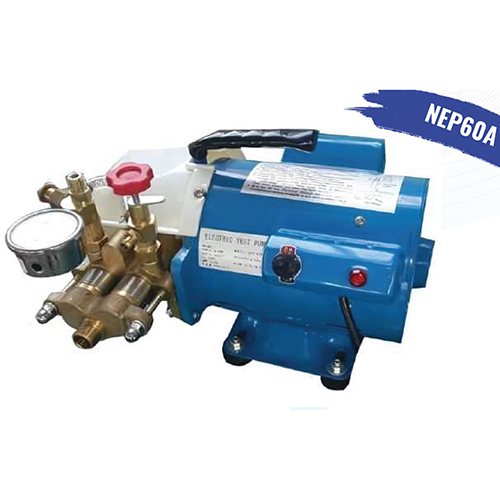
About Pressure Testing Pumps
Specification
|
Model Name/Number
|
Depends On Model Selected
|
|
Usage/Application
|
Industrial
|
|
Pump Type
|
Depends On Model Selected
|
|
Brand
|
Depends On Model Selected
|
|
Motor Horsepower
|
Depends On Model Selected
|
|
Pressure
|
Depends On Model Selected
|
|
Material
|
ABS Plastic / Stainless Steel
|
Efficient and Versatile Pressure TestingThese manual pressure testing pumps provide reliable performance across various industries, from plumbing to heavy industrial applications. With their portable and durable design, they ensure long-lasting service while offering effective hydrostatic testing for detecting leaks and verifying system strength. The ergonomic rubber grip and powder-coated finish further enhance usability and operator comfort.
Robust Construction and Smart DesignConstructed with mild steel, brass, or stainless steel, the pump assures corrosion resistance and robust durability. The pressure gauge allows accurate readings up to 60 Bar, and the nitrile rubber seals minimize the risk of leakage during operation. A user-friendly manual lever and polished finish make it easy to handle and maintain, ensuring smooth performance every time.
FAQ's of Pressure Testing Pumps:
Q: How do I properly operate a manual pressure testing pump?
A: To operate the pump, connect it to the system to be tested using the 1/2 inch BSP inlet/outlet, fill it with the appropriate test medium (water or oil), and use the ergonomic handle to manually pressurize the system. Monitor the pressure gauge up to 60 Bar and check for any pressure drops to identify leaks or weaknesses.
Q: What types of applications are suitable for this pressure testing pump?
A: This pump is ideal for hydrostatic pressure testing in plumbing, boilers, pipelines, gas cylinders, and pressure vessels. Its versatile design and manual operation make it suitable for both industrial and commercial environments.
Q: When should hydrostatic pressure testing be performed?
A: Hydrostatic pressure testing is typically performed during system installation, after repairs or modifications, and as part of routine maintenance schedules to ensure the integrity and leak-tightness of the system.
Q: Where can the pressure testing pump be used?
A: The pump is portable and suitable for use at construction sites, industrial facilities, and maintenance workshops. Its robust design and low noise operation allow for flexible deployment in various field or indoor settings.
Q: What process does the pump use for generating pressure?
A: The pump uses a positive displacement piston mechanism, operated manually, which draws the test medium and pushes it into the system, enabling precise control and gradual pressure build-up for accurate testing.
Q: How does the self-priming feature benefit the user?
A: The self-priming capability allows the pump to start working without the need for external priming, saving time and effort while ensuring efficient operation, even in applications where suction lift is required.
Q: What advantages does the durable, corrosion-resistant construction provide?
A: The use of powder-coated or polished mild steel, brass, or stainless steel increases the pump's lifespan, reduces maintenance needs, and maintains reliable performance in various environmental conditions.






 English
 Spanish
 French
 German
 Italian
 Chinese (Simplified)
 Japanese
 Korean
 Arabic
 Portuguese
 Send Inquiry
 Send Inquiry

